
Rama Krishna Sangem
Like most, Mark Tully who passed away at an age of 90 on January 25, Sunday, came to the field of journalism by chance. But, over the decades he became the symbol of objectivity in journalism and authenticity in reporting. People loved him for journalism and journalist loved him for his style of writing. Excel India pays tributes to the legendary media person.
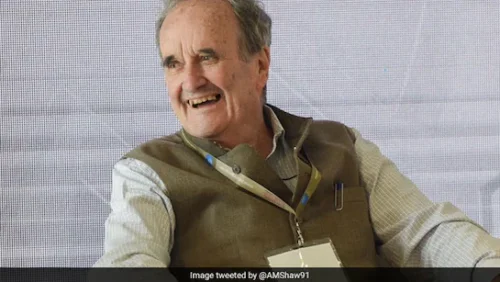
Mark Tully, veteran journalist and one of the sharpest foreign observers of India, died in Delhi at 90 after prolonged illness. He was undergoing treatment at Max Hospital. A proponent of objective journalism in India, Tully has left a deep void behind him.
Tully’s life can be seen as a long and complicated relationship with India. It began in privilege, passed through years of questioning and uncertainty, and finally became a lifelong dedication to understanding the country and telling its stories with honesty and care.
Born in 1935 in Tollygunge, in what was then colonial Calcutta, Mark Tully grew up in a sheltered British household.
Yet India left a strong mark on him. When he was sent to England at the age of nine, he found it bleak and lonely compared to the colour and warmth of the country he had left behind.
At Cambridge, Tully studied history and theology and briefly thought of becoming a priest. He joined a theological college but soon realised that the discipline did not suit him.
He left that path and turned, almost by chance, to journalism. When the BBC sent him to Delhi in the mid-1960s, he slowly discovered his true calling. Over time, his calm voice and clear reporting made him one of the most trusted foreign journalists in India. He became an inspiration to many young journalists who craved for objective writing.
Tully loved Indian politics, politicians
For more than thirty years, Tully reported on many of the most important events in modern Indian history. He covered the 1971 war that led to the creation of Bangladesh, the Emergency years, Operation Blue Star, the assassinations of Indira Gandhi and Rajiv Gandhi, the anti-Sikh riots, and the demolition of the Babri Masjid.
During the Ayodhya crisis in 1992, he even faced threats from an angry mob. He was not a distant reporter; he often stood close to danger and history. What made Tully special was the way he lived in India, not just reported on it. He learnt fluent Hindi, travelled widely by train, and spent time with politicians, villagers, religious leaders, and activists.
He did not see himself as a temporary foreigner. India, he said, was his home. He lived in Delhi for most of his life and moved easily between simple village homes and the corridors of power. He brought respectability and dignity to India in the international media.
Authored many books
Mark Tully also wrote many books about India. In Amritsar: Mrs Gandhi’s Last Battle, he examined the Punjab crisis. No Full Stops in India collected essays on poverty, faith, and social change. In later books such as India in Slow Motion and India’s Unending Journey, he wrote about corruption, religion, farming, extremism, and the future of Indian democracy.
Even his fiction reflected everyday Indian life with sympathy and understanding. In the 1990s, his long association with the BBC ended after he criticised its management, but he continued to write and speak on issues of faith and public life. He will be remembered as a rare genius in the field of media who held afloat the flag of credibility and conviction.
(This is a curated story with parts taken from India Today)